Basic First Aid
A BC occupational first aid course selected through a workplace assessment.

Basic First Aid vs Standard First Aid compares a WorkSafeBC workplace course with a broad Canadian Red Cross first aid program. Standard First Aid covers more general topics, but broader content does not automatically replace a workplace certificate. BC First Aid Courses helps learners choose by purpose and acceptance.
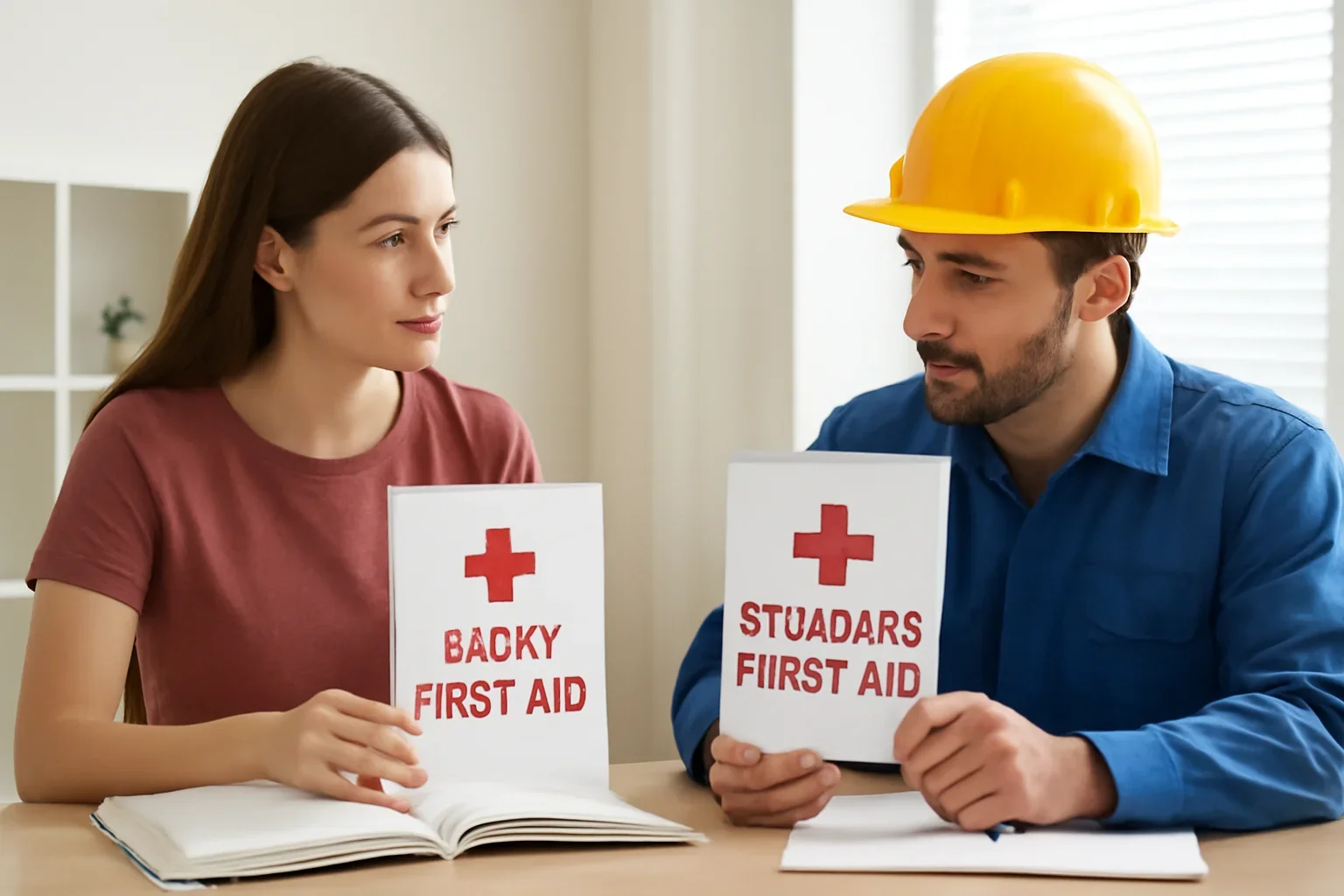
Use this Basic First Aid vs Standard First Aid table as a starting point, then confirm the exact rule with the organization that needs the certificate.
| Decision Point | Basic First Aid | Standard First Aid |
|---|---|---|
| Best Known For | WorkSafeBC attendant training at the basic level. | Wider first aid and CPR knowledge for work, school, and personal use. |
| Course System | BC workplace occupational first aid. | Canadian Red Cross national program. |
| CPR Scope | Defined within the occupational course standard. | Adult, child, and infant CPR Level C with AED. |
| Topic Range | Focused on the workplace level requirements. | Broad injury, illness, and emergency care topics. |
| Workplace Acceptance | Recognized when it matches the assessment. | Must be confirmed for the specific BC workplace requirement. |
For Basic First Aid vs Standard First Aid, begin with what each course is built to do.
A BC occupational first aid course selected through a workplace assessment.
A broad Red Cross course covering first aid, CPR Level C, AED, injuries, and sudden illness.
People often assume Standard First Aid must replace Basic First Aid because it is longer. That logic misses the main issue. WorkSafeBC recognition and the employer's assessment decide the workplace certificate, while a school or volunteer group may prefer Standard First Aid.
The accepted certificate FAQ explains the workplace check. Learners comparing general Red Cross options can also read Emergency First Aid versus Standard First Aid.
Best practice for Basic First Aid vs Standard First Aid: keep the written course requirement open while you compare the two options.

These Basic First Aid vs Standard First Aid examples show how the setting and duty can change the better fit.
Follow the WorkSafeBC level named in the documented assessment.
Use the exact Standard First Aid wording when that is the listed prerequisite.
Choose based on the skills and time you want, not workplace equivalency.
Because Basic First Aid vs Standard First Aid course names can be close, confirm any detail tied to work, school, or licensing.
Acceptance depends on the current recognized certificate list and the workplace requirement. Confirm before enrolment.
Standard First Aid usually has the broader general first aid scope, but that does not settle workplace recognition.
Yes. Some people keep separate certificates for different jobs, schools, or personal goals.
Read the rule, identify the course system, and avoid replacing a named certificate with one that only sounds similar.
